What Is Dyneema® Fabric and How Durable Is It?
Strauss Editorial TeamWhen shopping around for the best workwear, you’ll often come across technical fabrics like Dyneema®, CORDURA®, and ripstop. But what exactly is this? And does it make a difference on the job?
The short answer is yes. Dyneema® is one of the strongest fibers in the world by weight, making it an excellent choice for workwear that needs to stand up to heavy use, constant abrasion, and the most demanding jobsite conditions. Rather than adding unnecessary bulk, it delivers exceptional durability while helping garments remain lightweight and completely comfortable.
Below, we’ll explain the ins and outs of Dyneema® – how it’s made, why it’s used, and how it compares.
What Is Dyneema® Fabric?
Dyneema® is a high-performance fiber known for its exceptional strength-to-weight ratio. It's extremely resistant to abrasion and tearing, yet light enough to work into everyday clothing without weighing it down.
That's why it shows up in gear where failure isn't an option: climbing equipment, marine ropes, protective gear, outdoor equipment and our premium workwear.
For tradespeople, it means clothing can be reinforced exactly where it's needed, without making garments heavier or restricting movement.

How Durable Is Dyneema® in Everyday Workwear?
For tradespeople, durability usually comes down to how well clothing handles repeated friction. That's where Dyneema® stands out.
Because the fiber is exceptionally abrasion resistant, reinforced areas tend to last significantly longer where wear hits hardest: knees, pocket edges, hems and tool contact points.
If you work in construction, electrical, mechanical, landscaping or industrial trades, that means fewer worn-through knees, less fraying around pockets, and garments that keep performing day after day.

Where Is Dyneema® Used in STRAUSS Workwear?
We use Dyneema® strategically rather than throughout an entire garment.
Instead of adding overall weight, we place Dyneema® reinforcement in the areas that take the most wear. That extends the life of the garment while keeping it flexible and comfortable.
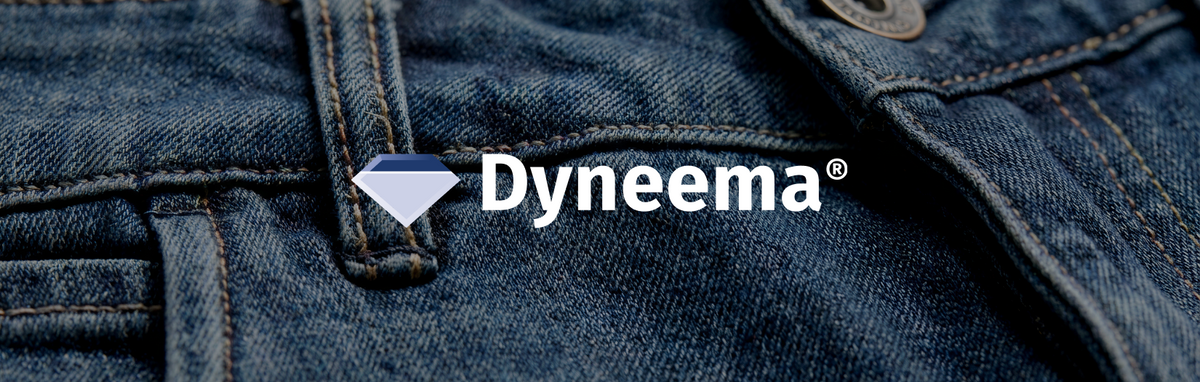
Our signature Dyneema® product is the Power Denim jeans. They have the look and feel you love in standard blue jeans, but the Dyneema®-reinforced denim delivers extra durability and a lightweight feel for whatever the day throws at you.
For the full lineup, explore our collection of Dyneema® workwear.

Dyneema® vs. CORDURA® vs. Ripstop: What's the Difference?
Not all performance fabrics are built for the same job. Dyneema®, CORDURA® and ripstop all improve durability, but each excels in a different way.
Dyneema®
Dyneema® is prized for its strength-to-weight ratio. Because it's both extremely strong and remarkably light, it's often used to reinforce high-wear areas without adding bulk.
Best for:
● High-abrasion areas like knees and pockets
● Lightweight workwear that still needs premium durability
● Tradespeople who need unrestricted movement
If you're constantly kneeling, climbing or carrying tools, Dyneema® reinforcement helps garments resist wear while staying comfortable all day.

CORDURA®
CORDURA® is a family of high-tenacity nylon fabrics engineered for abrasion resistance. It holds up to repeated scraping against concrete, timber, brick and steel far better than standard workwear fabrics, which is why it's common on knee panels, holster pockets, hems and elbow patches.
Best for:
● Heavy-duty construction work
● Frequent kneeling on rough surfaces
● Jobs with constant friction and abrasion
● Long-term durability in high-impact areas
CORDURA® is incredibly rugged but tends to be heavier than Dyneema®, making it ideal where maximum toughness matters more than minimal weight.

Ripstop
Unlike Dyneema® or CORDURA®, ripstop isn't a fiber. It's a weaving technique. Stronger reinforcement yarns are woven into the fabric in a grid pattern, creating small squares that contain damage. If the fabric is punctured or snagged, the grid helps stop the tear from spreading.
Best for:
● Lightweight workwear
● Outdoor and landscaping jobs
● Trades where clothing catches on branches, fencing or sharp edges
● Keeping minor damage from becoming a major repair
Ripstop improves tear resistance, but it generally won't match the abrasion resistance of CORDURA® or the strength-to-weight performance of Dyneema®.

The Science Behind Dyneema®: Why Is It So Strong?
For those who want to know what's going on at the fiber level, here's what makes Dyneema® different.
It starts with UHMWPE.
Dyneema® is made from ultra-high-molecular-weight polyethylene (UHMWPE), an advanced form of polyethylene. "Ultra-high molecular weight" refers to its exceptionally long molecular chains, which are far longer than those in everyday plastics.
Gel spinning aligns the molecules.
Dyneema® fibers are produced through a specialized gel-spinning process that draws those long chains out and lines them up in parallel. When the fiber is put under load, that force is spread across a huge number of aligned chains instead of concentrating in weak spots.
Strength without weight.
This structure gives Dyneema® its combination of high strength, low weight and outstanding resistance to abrasion, tearing and wear.
Built for the most demanding fields.
Dyneema® was originally developed for military, industrial and technical applications before making its way into outdoor gear and, eventually, premium workwear like what we make at STRAUSS.
Is Dyneema® Workwear Worth It?
Not every tradesperson needs the highest level of fabric reinforcement. But if your work involves kneeling on abrasive surfaces, carrying heavy tools, frequent ladder work, daily construction, industrial environments or repetitive movement in high-friction areas, Dyneema® is worth a serious look.
The upfront cost may be higher, but garments that stay intact longer often deliver better long-term value through fewer replacements and consistent performance. For professionals who rely on their gear every day, it's an investment worth making.