Conceptos básicos de capas en ropa de trabajo: cómo mantenerte abrigado, seco y productivo en cualquier clima
Strauss Editorial TeamThey say there’s no such thing as bad weather, just bad clothing. Whether you’re laying tile, wiring a fixture, or cleaning up the barn, you know that staying warm and dry in the wind, rain, sleet, or snow isn’t just about comfort. It's about working safely and efficiently. And the most efficient way to work in the cold is having the right layers.
Body temperature regulation. Moisture management. Protection from frigid conditions. Done right, you’ll hardly notice the cold. Done wrong, you’ll go from sweating one second to shivering the next.
This cold-weather layering guide breaks down the best way to layer for your job, what materials to look out for. We even threw in some tips and tricks to keep you focused, no matter the forecast.
Why Layering Matters
Many workers dress too heavily in the morning, overheat by lunch, and then end up cold and damp in the evening. Instead of wearing one or two heavy items, layer up. Layering is essential for staying warm, dry, and comfortable. It’s the most efficient, safest, and most adaptable way to prevent overheating, while still allowing you to move freely on the job.
In short layering helps you:
● Stay warm by trapping heat efficiently without bulk.
● Stay dry by wicking away sweat before it chills you.
● Stay protected from wind, rain, and snow with an adaptable shell.
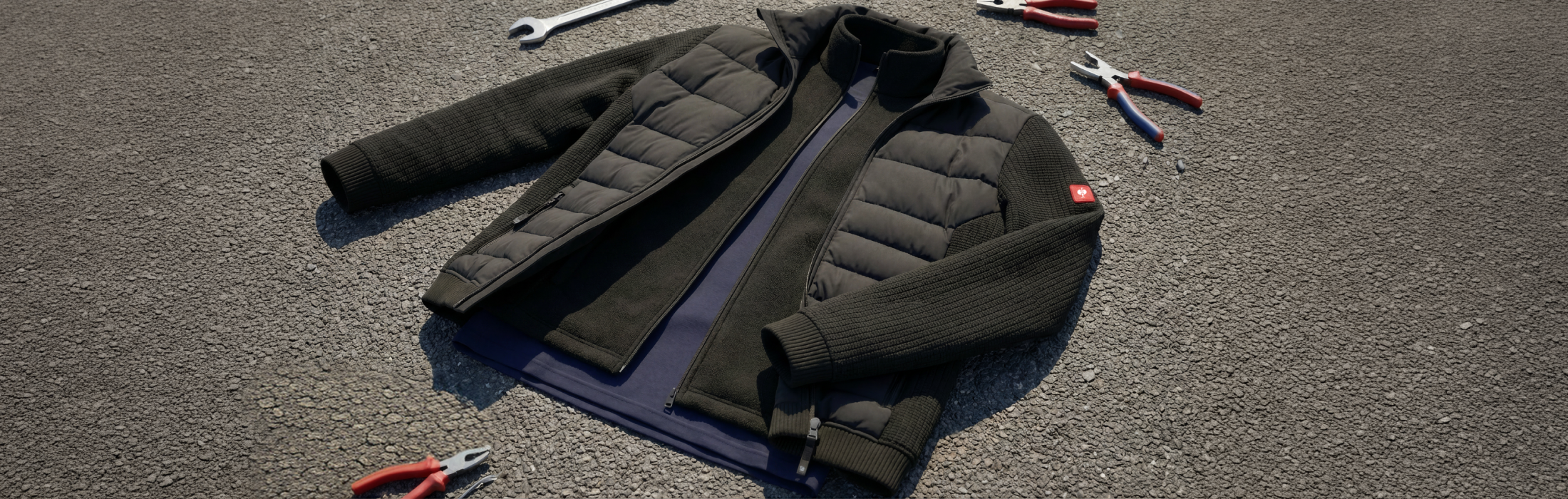
A good system starts with a baselayer. And a good baselayer wicks away sweat, preventing moisture from forming against your skin and cooling you down. The midlayer tackles insulation by trapping warm air close to your body. And that outer shell blocks wind, rain, snow, and anything that may slow you down. Because it’s modular, the whole package performs better than any single garment.
The 3-Layer System
1. Base Layer: Your Warm Foundation
Your base layer sits directly against your skin. Its main job is to move moisture away from your body so you don’t get a chill when you sweat.
What are the best materials for your base layer?
● Synthetic blends (polyester, nylon): These fabrics dry fast and are plenty durable.
● Stretch fabrics: Those working on active jobsites should opt for performance stretch fabrics that offer extra freedom of movement.
● Merino wool: Naturally breathable, odor-resistant, and warm even when damp.
Pro Tip: Avoid 100% cotton base layers! Cotton holds moisture and dries slowly, which can quickly become bad news in the cold, as it’ll trap the cold next to your skin.

2. Mid Layer: Your Insulation Zone
The role of your mid layer is to trap body heat. When it’s cold, use it to keep warm. As the jobsite heats up, feel free to toss the mid layer aside.
What are your optimal midlayers?
● Fleece Jackets or Vests: These are lightweight, warm, breathable, and easily fit under most outer layers.
● Softshells: More weather resistant than fleece and more flexible than a bulky coat, softshells are great if you expect wind, light precipitation, or frequent movement on the job.
● Synthetic Insulated Jackets: Providing similar warmth to down but performing better in wet and damp conditions, these trap heat more than fleece but still allow breathability and are most useful when you expect hard work but need extra warmth.
● Wool Sweaters: Wool insulates and regulates temperature, even when damp.
Pro Tip: Choose slim-fitting mid layers that fit comfortably under your outer jacket. This will help you move better in the cold.

3. Outer Layer: Your Shield
Your outer layer is your shield from the elements. No wind, rain, or snow should penetrate it.
What should you look for?
● Waterproof, windproof, and breathable membranes like our dryplexx® technology.
● Taped seams that block leaks.
● Adjustable cuffs, hems, and hoods to create a tight seal.
● Ventilation zips for extra breathability during high-exertion tasks.
Pro tip: In milder but wet climates, a lightweight waterproof shell is better than a heavy winter coat. It’s also easier to vent and combine with layers underneath.

Layering Tips for Your Trade
Construction / Carpentry
Needs: Mobility, durability, heat regulation
Recommended layers:
- Base: Moisture-wicking long sleeve shirt
- Mid: Fleece or lightweight synthetic-loft jacket
- Outer: Softshell jacket (hi-vis for construction) for movement and abrasion resistance
Pro Tip: Prioritize stretch in mid-layers for climbing, lifting, or overhead work.
STRAUSS pick:

Electricians
Needs: Frequent transitions between warm and cold spaces
Recommended layers:
- Base: Moisture-wicking light thermal or long sleeve shirt
- Mid: Thin fleece or merino sweatshirt
- Outer: Lightweight insulated jacket that’s easy to take on/off
Pro Tip: Choose low-bulk layers for maneuvering in tight areas. Also, definitely avoid overly warm jackets because you’ll probably overheat.
STRAUSS pick:

Landscaping / Groundskeeping
Needs: Exposure to wind, moisture, and constant movement
Recommended layers:
- Base: Synthetic thermal that dries fast
- Mid: Waffle fleece or warm sherpa fleece
- Outer: Windproof softshell or waterproof jacket depending on weather
Pro Tip: Prioritize breathability. Consider pairing your waterproof boots with wool socks for extra warmth.
STRAUSS pick:

Snow Removal / Winter Maintenance
Needs: Tackling high exertion tasks in freezing temperatures
Recommended layers:
- Base: Warm thermal without the bulk
- Mid: Warm, sturdy mid-layer (ideal for stop-and-go work), thick sweatshirt or a classic wool sweater
- Outer: Insulated waterproof shell, but look for one with zip ventilation to help you cool off a bit
Pro Tip: Keep extra socks in your car and make sure you have a balaclava or warm scarf for dealing with windchill. For the perfect layering garment, consider our 3-in-1 Winter Jacket.
STRAUSS pick:

HVAC / Plumbers
Needs: Crawling into cold spaces, kneeling, and dealing with big temperature swings
Recommended layers:
- Base: Lightweight stretch cotton or synthetic tee or long sleeve
- Mid: Stretch fleece or padded vest to keep your core warm and arms free
- Outer: Softshell or a hybrid jacket with added flexibility
Pro Tip: Prioritize a great vest as a mid layer because it’ll offer warmth without bulk, so you can access tight spaces. For cold floors, consider work pants with knee pads.
STRAUSS pick:
- Base: Cotton stretch T-Shirt
- Mid: Full-Zip Fleece Jacket
- Outer: Hybrid Jacket e.s.trail pure

Masonry
Needs: Cold, wet, dusty environments
Recommended layers:
- Base: Warm, breathable thermal
- Mid: Warm loft jacket or a comfortable, baggy hoodie will do
- Outer: Waterproof windbreaker to beat the elements.
Pro Tip: Make sure your pants are durable (ideally with some insulation) for long stationary periods.
STRAUSS pick:

Security / Site Safety Personnel
Needs: Long periods of standing still in cold
Recommended layers:
- Base: Warm, lightweight thermal without the bulk
- Mid: Thick sherpa fleece midlayer
- Outer: Heavy insulated parka or bomber jacket
Pro Tips: Add some wool socks and foot warmers to keep the feet warm. And don’t forget the hand warmers as well.
STRAUSS pick:

Mechanics / Fleet Maintenance
Needs: Cold garages, limited mobility, reaching overhead
Recommended layers:
- Base: Light-to-midweight performance stretch long sleeve shirt
- Mid: Warm fleece or quilted shirt jacket
- Outer: Softshell or a hybrid protective work jacket with added flexibility
Pro Tip: Avoid bulky layers that restrict reaching or leaning under vehicles. Also, look at the sleeves of your layers to make sure you can still slide on your gloves easily.
STRAUSS pick:

Forestry / Logging
Needs: Mobility but added protection from wind, snow, branches
Recommended layers:
- Base: Moisture-wicking tee or long sleeve to clear the sweat on long days
- Mid: Tough fleece or lightly insulated jacket
- Outer: Robust padded jacket
Pro Tip: Consider a windproof middle layer because that windchill will hit hard. Also, make sure your layers allow for full range of motion because you’ll need it when working the chainsaw.
STRAUSS pick:
- Base: Performance T-Shirt
- Mid: Hooded Sherpa Fleece Jacket e.s.e:pic
- Outer: Bomber Jacket e.s.iconic

If you couldn’t find your trade, below are your best layering structures based on your work conditions.
Layering Strategies for Different Work Conditions
Different jobs and different environments call for different layering setups. Here’s how to adapt your layering system for your working conditions.
Cold & Dry
- Base: Midweight thermal top with warm leggings or long underwear.
- Mid: Fleece, wool sweater, or insulated jacket.
- Outer: Windproof softshell or parka.
Add-ons: Beanie, insulated gloves, thick wool socks.
Cold & Wet
- Base: Synthetic moisture-wicking thermal.
- Mid: Thin fleece or softshell jacket.
- Outer: Waterproof shell with sealed seams.
Add-ons: Waterproof boots and gloves.
Mild & Windy
- Base: Lightweight, synthetic base layer.
- Mid: Wind-resistant softshell (no insulation).
- Outer: Optional rain shell if needed.
Active Jobs (high movement, lots of exertion)
- Prioritize breathability, so opt for lightweight bases, thin mid layers, and vented outer layers.
- Carry an extra warm layer to throw on during breaks when your body cools down.
Static Jobs (less movement, long hours outdoors)
- Go heavier on insulation.
- Choose lofted mid layers and thicker, wool base layers.
Pro Tips for Tradespeople
Layering isn’t just about piling on clothes, but it’s a serious task about balancing heat and moisture.
1. Dress for the Task, Not the Temperature
You’ll warm up quickly once you start moving. Start slightly cool in the morning. If you’re already toasty before you start work, you’ll overheat in minutes.
2. Vent When Needed
Use zippered vents, undo cuffs, or shed your mid layer during intense activity. Avoid sweating heavily, which will lead to the chills later.
3. Avoid Bulking Under PPE
If you wear hi-vis vests, harnesses, or safety jackets, look for streamlined thermal layers. Thin but warm fabrics like Merino or advanced synthetics give you insulation without bulk.
4. Keep Your Extremities Covered
Your body loses most heat through your head, hands, and feet. Wear thermal socks, insulated gloves, and a hat that fits under your helmet.
5. Rotate and Dry Gear Daily
Moisture shortens the life of your workwear. Rotate base layers and hang them to dry after every shift. Keep a spare pair of gloves or socks in your car for emergencies.